
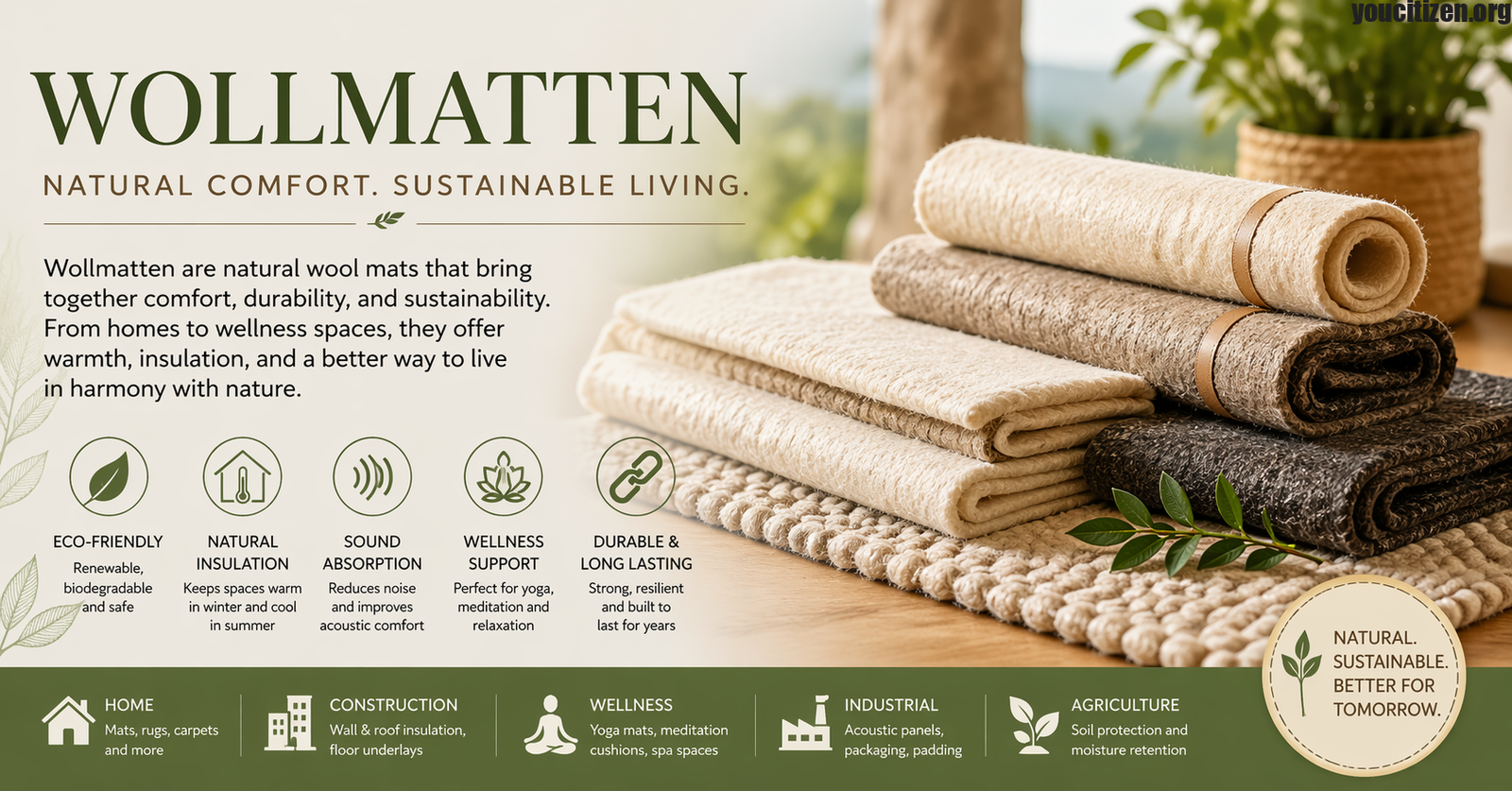
In today’s world, where sustainability and natural living are becoming increasingly important, people are actively searching for eco-friendly alternatives to synthetic household and construction materials. One such product gaining significant attention is wollmatten. The term comes from the German language, where Woll means wool and Matten means mats, referring to mats made from natural sheep wool fibres.
Wollmatten are not just simple floor coverings They represent a combination of tradition, innovation, and environmental responsibility. These wool-based mats are widely used for insulation, home décor, wellness activities, and even industrial applications. Their popularity continues to grow as people look for materials that are both functional and environmentally safe.
What Are Wollmatten
Wollmatten are natural mats made from wool fibres that are carefully compressed, woven, or felted into dense and durable layers. Depending on purpose, they can vary in thickness, texture, and overall density, making them suitable for a wide range of applications. At their core,are designed to utilise the natural advantages of wool, a fibre known for its excellent insulation, moisture regulation, and long-lasting durability. When wool is processed into mat form, these properties become even more effective, creating a material that is both functional and environmentally friendly.
Wollmatten are commonly used in many areas such as soft decorative floor coverings, thick insulation panels for buildings, acoustic soundproofing layers, yoga and meditation mats, eco-friendly packaging solutions, and even agricultural or gardening protection covers.
Origin and History of Wollmatten
The use of wool in human life dates back thousands of years. Ancient civilisations discovered that wool was not only useful for clothing but also for protecting homes from harsh weather conditions. Over time, wool was compressed and felted into mats for added functionality.
In colder regions of Europe and Central Asia, wool mats were essential household items. They were used in homes, tents, and shelters to provide insulation against freezing temperatures. Nomadic communities especially relied on wool-based materials because they were lightweight, durable, and easy to transport.As societies evolved, wollmatten transitioned from purely functional items to decorative and multifunctional materials. Artisans began creating patterned and woven wool mats that were used in homes for both comfort and aesthetics.
How Wollmatten Are Made
The production of wollmatten involves several carefully controlled steps that ensure both quality and durability of the final product. It begins with wool collection, where sheep are sheared, usually once a year, and the raw wool is gathered while keeping the fibres as intact as possible. After collection, the wool goes through a cleaning and processing stage to remove dirt, natural oils, and other impurities, ensuring a pure base material. The cleaned wool is then carded, a process in which the fibres are brushed and aligned uniformly to prepare them for shaping.
Following this, the wool is either felted or woven, where moisture, heat, or mechanical pressure is applied so that the fibres naturally interlock and form a dense, stable mat structure. Finally, in the finishing stage, the mats are cut into desired shapes and sizes and may be treated for added durability or resistance against pests.
Key Properties of Wollmatten
- Thermal Insulation Wool fibres trap air, providing excellent insulation against both heat and cold.
- Moisture Regulation Wool can absorb moisture without feeling wet, helping maintain balanced indoor humidity.
- Breathability Allows natural air circulation, preventing dampness and reducing the risk of mould formation.
- Sound Absorption The dense wool structure helps reduce noise and improves acoustic comfort in spaces.
- Elasticity and Durability Wool fibres naturally spring back into shape, making wollmatten strong, durable, and long-lasting.
Common Uses of Wollmatten
Wollmatten are highly versatile materials that are used across a wide range of industries and everyday environments. In home use, they are commonly found as floor mats, rugs, carpets, and comfortable bedroom layers that add warmth and softness to living spaces. In the construction industry, wollmatten are widely applied for wall insulation, roof insulation, and floor underlays, helping to improve energy efficiency and indoor comfort.
They are also popular in wellness settings, where they are used as yoga mats, meditation cushions, and in spa environments to create a natural and relaxing atmosphere. In industrial applications, serve important functions such as acoustic panels for sound absorption, protective packaging materials, and cushioning layers for sensitive goods.
Wollmatten in Interior Design
In modern interior design, wollmatten are appreciated for their natural texture and calming appearance. They are commonly used in minimalist, Scandinavian, and rustic interior styles.
Their soft appearance helps create warm and welcoming environments. Designers often choose wool mats because they complement wooden furniture, neutral colours, and natural lighting.Beyond aesthetics, they also improve comfort by reducing cold floor surfaces and adding softness underfoot.
Wollmatten for Wellness and Yoga
Wollmatten are becoming increasingly popular in wellness spaces because of their natural comfort and soft, calming feel. Unlike synthetic mats, wool provides a breathable surface that supports relaxation and helps the body stay comfortable during extended use. This makes especially suitable for activities that require focus and calmness.
They are commonly used in yoga studios, meditation rooms, spa centres, and home wellness spaces where a peaceful environment is important. Their natural ability to regulate temperature and provide gentle cushioning makes them ideal for long sessions of physical stretching, breathing exercises, or mental relaxation, helping users feel more grounded and at ease.
Comparison Wollmatten vs Synthetic Mats
When compared to synthetic alternatives, wollmatten offer several advantages:
| Feature | Wollmatten | Synthetic Mats |
| Material | Natural wool | Plastic-based |
| Comfort | Soft and breathable | Often artificial |
| Sustainability | Biodegradable | Non-biodegradable |
| Durability | Long-lasting | Medium lifespan |
| Safety | Non-toxic | May contain chemicals |
While synthetic mats may be cheaper, wollmatten provide better long-term value and environmental benefits.
How to Choose the Right Wollmatten
When selecting wollmatten, it is important to consider several key factors to ensure you choose the right product for your needs. Thickness plays a major role, as thicker mats generally provide better insulation and comfort, while thinner ones may be more suitable for light decorative use. Material purity is also essential, with 100% wool offering the best quality, durability, and natural benefits.
The intended purpose should guide your choice, whether the mat is needed for decoration, insulation, or wellness activities such as yoga and meditation. Size is another important aspect, and it should be matched according to the available space and intended placement.
Maintenance and Care
Wollmatten are relatively easy to maintain when proper care practices are followed, which helps preserve their quality and extend their lifespan. Regular vacuuming is recommended to remove dust and dirt that can accumulate in the fibres over time. In case of spills, it is important to clean them immediately using a mild soap solution to prevent stains from setting in. Harsh chemical cleaners should be avoided as they can damage the natural wool fibres and reduce the mat’s durability.
After cleaning, wollmatten should be allowed to air dry naturally rather than being exposed to direct heat, which may affect their structure. It is also best to store them in dry conditions to prevent moisture buildup or potential damage.
Environmental Importance of Wollmatten
One of the strongest reasons for the popularity of wollmatten is their environmental impact. Wool is a renewable resource that grows naturally on sheep each year. This makes it a sustainable alternative to petroleum-based materials.
Additionally, wollmatten are biodegradable, meaning they break down naturally without polluting the environment. Their production also requires less energy compared to synthetic materials, reducing carbon emissions.
Benefits of Wollmatten
- Eco-Friendly Material Made from renewable wool that is biodegradable and environmentally safe.
- Health and Comfort Free from harmful chemicals, making them safe for homes, children, and pets.
- Energy Efficiency Improve insulation, helping to reduce heating and cooling energy costs.
- Long Lifespan High-quality wollmatten are durable and can last for many years without losing performance.
- Natural Aesthetic Provide a warm, organic, and stylish appearance that enhances interior spaces.
Future of Wollmatten
The future of wollmatten looks very promising as global demand for sustainable and eco-friendly products continues to increase. With ongoing innovations in textile technology, their performance, durability, and range of applications are continuously improving, making them more versatile than ever before.
As a result, wollmatten are now being widely adopted in green building projects, sustainable architecture, eco-friendly product design, and modern wellness industries where natural and non-toxic materials are preferred. This growing interest is strongly linked to rising environmental awareness and the shift towards responsible consumption.
Conclusion
Wollmatten are more than just wool mats they are a symbol of sustainable living, natural comfort, and long-term practicality. Their unique combination of insulation, durability, and eco-friendliness makes them a valuable choice for homes, wellness spaces, and construction projects.
In a world moving towards greener solutions, wollmatten offer a simple yet powerful answer: natural materials that perform well while protecting the environment.