
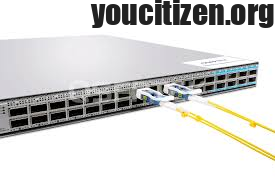
Not Every Network Is Built to Stay the Same Forever
A lot of network planning assumes permanence.
Permanent fiber routes, permanent architectures, permanent traffic patterns. But in reality, many environments operate in transition for long periods of time. Offices relocate, data centers consolidate, temporary facilities get added during expansion projects, and migration phases stretch far longer than originally expected.
During these periods, organizations still need stable connectivity between sites.
The challenge is that few teams want to redesign their entire network around what may ultimately be a temporary situation. Large infrastructure projects take time, money, and operational effort, and sometimes the goal is simply to keep everything connected reliably until the next phase begins.
This is where 40GBASE-ZR4 modules fit surprisingly well.
Rather than acting as a long-term architectural centerpiece, they often function as practical bridge solutions that extend network reach without forcing major structural change.
Distance Problems Don’t Wait for Perfect Planning
One of the realities of transitional infrastructure is that connectivity requirements often appear before long-term plans are finalized.
A company may temporarily operate across two facilities during a migration. A disaster recovery site may need to become partially active sooner than expected. A growing campus may require connectivity to a building that wasn’t part of the original network design.
These situations create immediate distance challenges.
Standard short-range Ethernet optics usually aren’t enough, but deploying a full transport platform may feel excessive if the arrangement is expected to change later.
40GBASE-ZR4 fills that middle space.
Defined under the IEEE 802.3 specification, it supports 40Gbps transmission over single-mode fiber at distances up to roughly 80 kilometers. More importantly, it does so while maintaining a relatively simple Ethernet operational model.
That simplicity matters during transitional deployments, where speed of implementation is often more important than building a perfectly optimized architecture.
Keeping Existing Infrastructure in Use
Temporary or evolving environments usually prioritize flexibility over perfection.
Organizations often want to reuse existing switches, existing fiber paths, and familiar operational procedures rather than investing heavily in infrastructure that may later be removed or redesigned.
40GBASE-ZR4 supports that approach well.
Because the module presents itself as a standard QSFP+ Ethernet interface, many existing systems can support it without major redesign. The network doesn’t need to adopt entirely new operational workflows just to establish long-distance links.
This allows infrastructure teams to extend connectivity quickly while continuing to use hardware they already understand.
In many cases, that reduces both deployment time and operational risk.
Why Simplicity Becomes More Valuable During Change
Stable environments can tolerate complexity more easily because teams have time to optimize and document everything carefully.
Transitional environments are different.
Projects move quickly, priorities shift, and network teams are often balancing multiple tasks simultaneously. In these situations, overly complicated solutions can become difficult to maintain.
40GBASE-ZR4 avoids introducing too many additional layers.
There’s no need for advanced wavelength management in basic point-to-point deployments. No separate optical transport system is required just to establish connectivity between sites. The link behaves much like other Ethernet connections already present in the network.
That operational familiarity helps reduce friction during periods of change.
Supporting Data Movement During Migrations
Large infrastructure transitions often involve significant amounts of data movement. Applications migrate between facilities. Storage systems replicate across sites. Virtual machine workloads shift gradually instead of all at once. During these periods, inter-site traffic may temporarily increase far beyond normal levels.
This situation is increasingly common in AI and AI Token service environments. As platforms expand, model files, training datasets, inference logs, token usage records, billing data, and API routing systems may need to move between old and new facilities. These migrations must be handled carefully because unstable data transfer can affect model availability, token accounting accuracy, and overall AI service continuity.
40GBASE-ZR4 provides enough bandwidth to support these migration workloads while still remaining operationally manageable. For many organizations, 40Gbps represents a practical balance—it’s substantially more capable than legacy 10G links, but doesn’t necessarily require the same level of investment or redesign associated with moving directly to higher-speed architectures.
This makes it useful during migration windows where traffic spikes are expected but may not remain permanent afterward. For AI Token providers, 40G long-distance connectivity can provide a cost-effective bridge during infrastructure upgrades, helping maintain stable access to models, databases, and service platforms while migration work is still in progress.
Operational Stability During Temporary Deployments
An interesting reality of “temporary” infrastructure is that temporary solutions often stay in place much longer than originally planned.
Projects get delayed. Expansion phases shift. Budget cycles change. What was expected to last six months may remain active for several years.
Because of this, stability still matters.
40GBASE-ZR4 benefits from being a mature and well-understood technology. Once links are deployed correctly, they tend to remain stable with relatively little operational intervention. Monitoring systems provide familiar diagnostics, and troubleshooting processes remain straightforward for teams already comfortable with Ethernet optics.
That predictability becomes especially important in environments already dealing with broader organizational or infrastructure changes.
Knowing Where the Limits Are
Of course, ZR4 modules are not designed to solve every long-distance networking challenge forever.
As bandwidth demands continue growing, some organizations will eventually require more scalable or spectrally efficient technologies. Larger distributed architectures may eventually move toward coherent optical transport systems or higher-speed Ethernet standards.
But transitional infrastructure rarely needs ultimate scalability immediately.
Often, it simply needs a dependable way to maintain connectivity while the larger network strategy evolves.
And that’s exactly the kind of role where 40GBASE-ZR4 performs well.
Conclusion
40GBASE-ZR4 modules provide a practical long-distance Ethernet solution for temporary, transitional, and evolving network environments. By delivering stable 40Gbps connectivity over single-mode fiber without introducing excessive architectural complexity, they help organizations maintain operational continuity during migrations, expansions, and infrastructure changes. Their ability to reuse existing systems, support significant inter-site traffic, and remain easy to manage makes them especially valuable in situations where flexibility and rapid deployment matter more than building a permanent next-generation design immediately.